
How Often Should You Test Your Well Water?
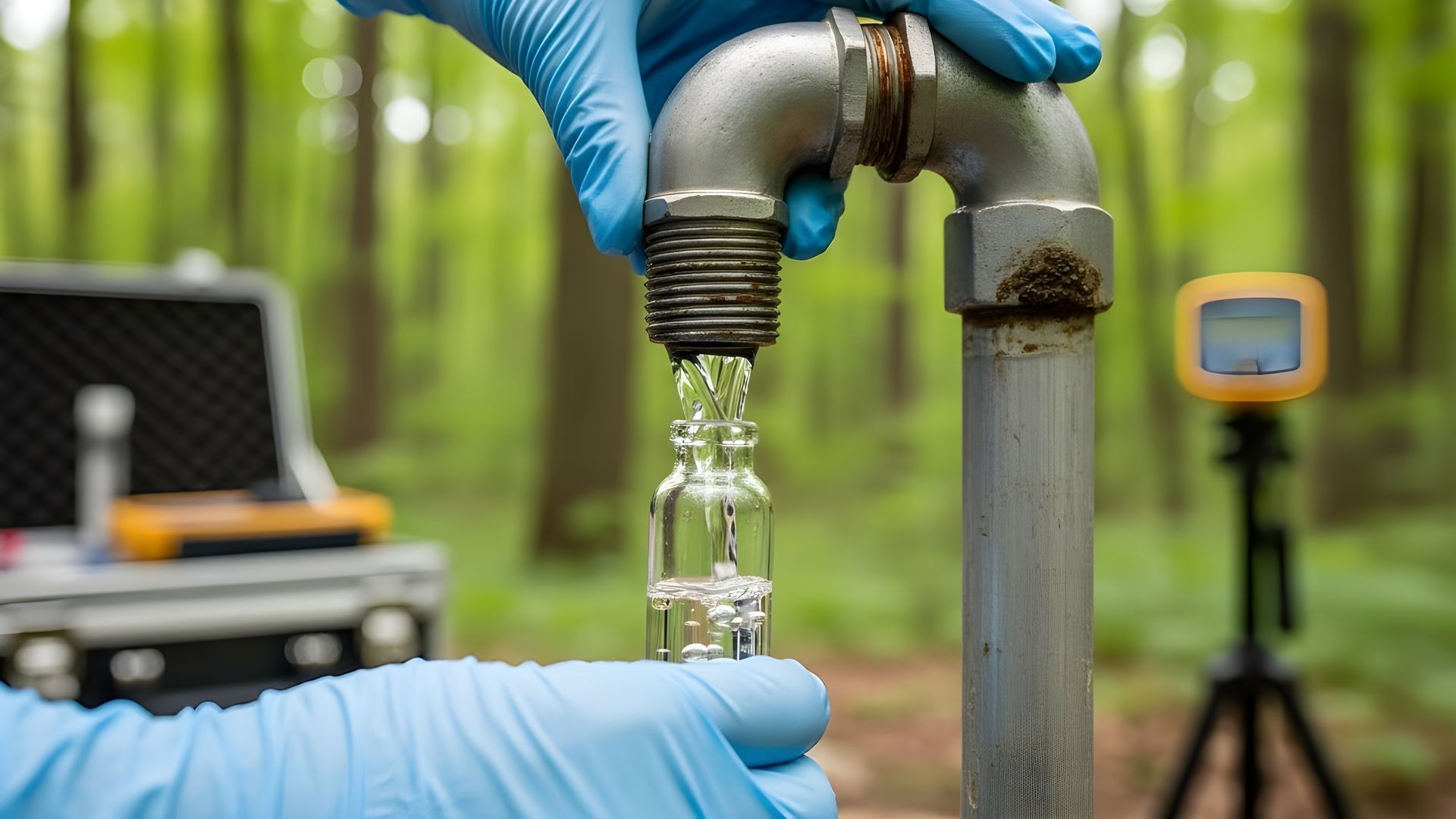
Private well water doesn't come with the routine testing a municipal water system goes through before it reaches your tap, which means that responsibility falls to you as the well owner. A lot of homeowners test once, when they move in or first notice a problem, and then don't think about it again for years, sometimes for the life of the well. Here's a more realistic testing schedule, and why it matters even when your water looks and tastes fine.
Why Testing Matters Even When Water Seems Fine
Many of the most common well water concerns — bacteria, nitrates, and certain minerals don't change how water looks, tastes, or smells. A well can test positive for a water quality issue while still appearing completely normal at the tap, which is exactly why relying on your senses alone isn't a reliable substitute for an actual test. This is also why “our water has always been fine” isn't quite the same claim as “our water has actually been tested recently,” even though the two often get treated as equivalent.
A General Testing Schedule
Most well owners benefit from a baseline water test annually, covering bacteria and nitrates at minimum, with a broader test — covering hardness, iron, and other mineral content — done periodically or any time you notice a change in water quality. Properties with young children, pregnant household members, or anyone with a compromised immune system may benefit from more frequent testing, since some contaminants pose a higher relative risk to those groups. There's no single schedule that fits every household, but an annual baseline is a reasonable starting point for most private well owners.
Situations That Call for Testing Outside the Normal Schedule
A few situations are worth testing outside your normal annual schedule:
• After any flooding or heavy, sustained rainfall near the well.
• After any repair or service work done on the well or pump system.
• If you notice a sudden change in taste, smell, or appearance.
• Before moving into a home with an existing well you haven't tested yourself.
• If a nearby property reports a well water quality issue.
• After any new construction or excavation activity near your well.
What a Standard Test Typically Covers
A basic annual test usually checks for coliform bacteria and nitrate levels, since these are the most immediate health-related concerns and can change year to year based on factors like local land use, septic systems, or agricultural activity nearby. A broader test can also cover hardness, iron, sulfur, and other minerals that affect water quality and system performance rather than immediate health risk. Which combination of tests makes sense depends partly on what's common in your specific area, since local aquifer conditions vary enough that a one-size testing panel isn't always the most useful approach.
Keeping Records Over Time
A single test tells you about one point in time, but keeping records from year to year lets you see whether something is trending in a direction worth addressing — hardness slowly increasing, for example, or a mineral level that's crept up over several seasons. This kind of pattern is easy to miss if each test exists in isolation, but useful to notice if you're keeping a simple record of results over time.
What to Do With Your Results
If a test comes back showing an issue, the right next step depends on what it found — some results point toward a water conditioning solution, while others may point to something that needs attention at the well itself. Understanding what your specific results mean is worth a conversation rather than guessing, since the appropriate response varies significantly depending on what's actually in the water. Not every elevated reading calls for the same fix, which is part of why reading a report accurately matters as much as getting the test done in the first place.
Testing Is a Habit, Not a One-Time Task
It's easy to treat a water test as something you do once and move on from, but well water conditions can shift over time for reasons that have nothing to do with anything you've done — changes in local land use, seasonal variation, or simply the well aging over the years. Building testing into a regular habit, rather than treating it as a one-time box to check, is what actually gives you a reliable picture of your water over the long run rather than a single snapshot from whenever you happened to think of it.
Stay Ahead of Water Quality Changes
K & K Well Drilling, Inc. is a licensed Illinois well contractor serving private well owners throughout Northern Illinois. If it's been a while since your last test, or you're not sure what schedule makes sense for your property, call
(630) 553-5111 to discuss your situation. Travel fees may apply depending on your location.